



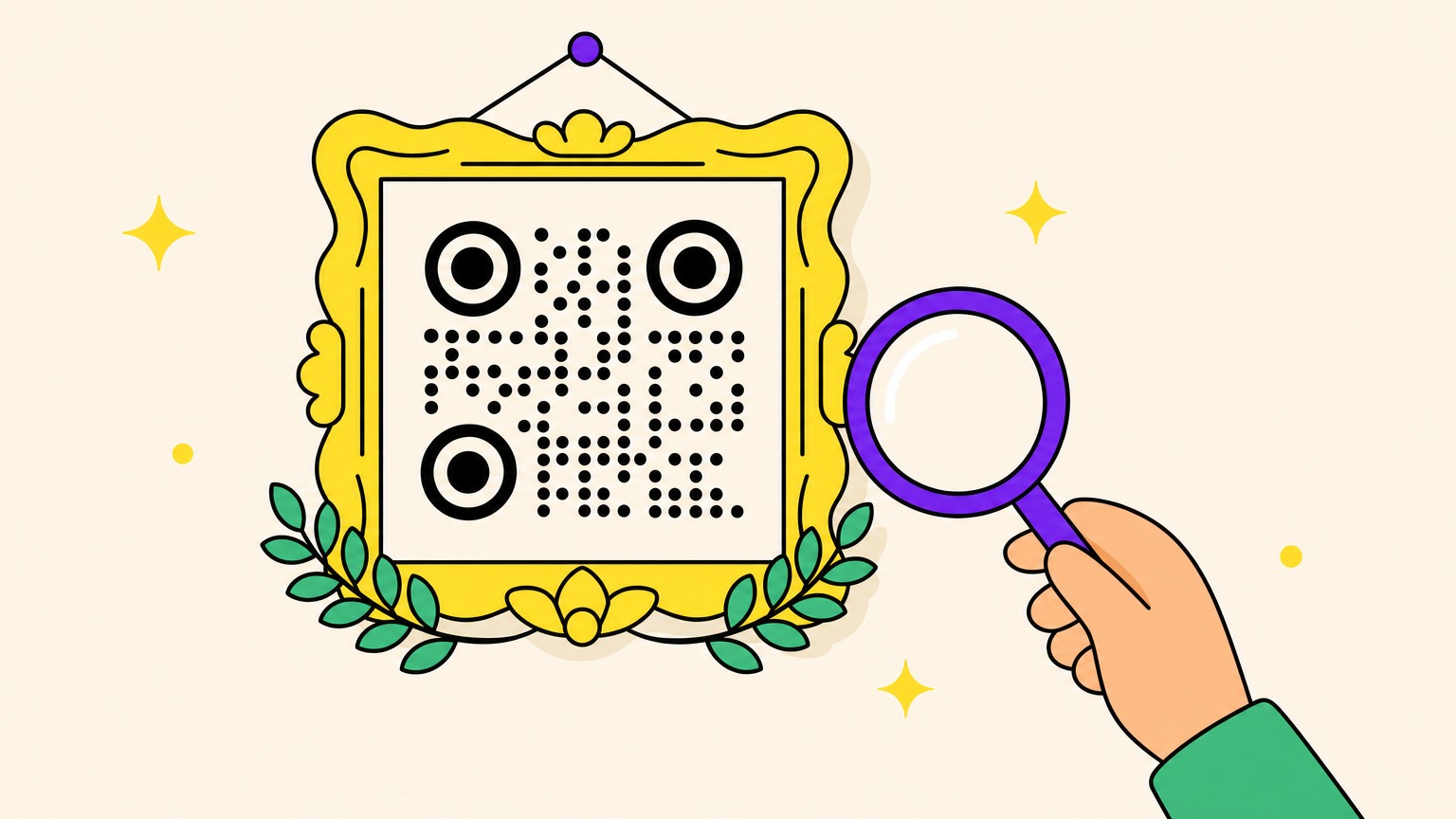
Ah, this famous QR code, the guardian of our data! It holds as much information as a member of the intelligence services. It carries up to 7000 numeric characters (that blows your mind, doesn't it?). It saved our skin in 2020 during the health crisis, allowing us to preserve our space by limiting contact, but also by avoiding putting our fingers on the sticky card of the brewery at the bottom of our street. And just for that, we love it. But apart from that, what do we know about this mysterious black and white square?
Let us tell you the fabulous QR story!
The QR code, what is it?
We'll skip the ultra-technical details at the risk of everyone getting lost in the maze of cutting-edge technology, but what you need to remember is that the QR code, or Quick Response code in English, is a type of two-dimensional barcode. Its two-dimensional structure allows it to store a large amount of information, such as URL links, text, phone numbers, GPS coordinates, and much more! The record is 7,089 digits, and we measured what it takes to read such a code: a print 20 cm wide, at arm's length, and not every time.
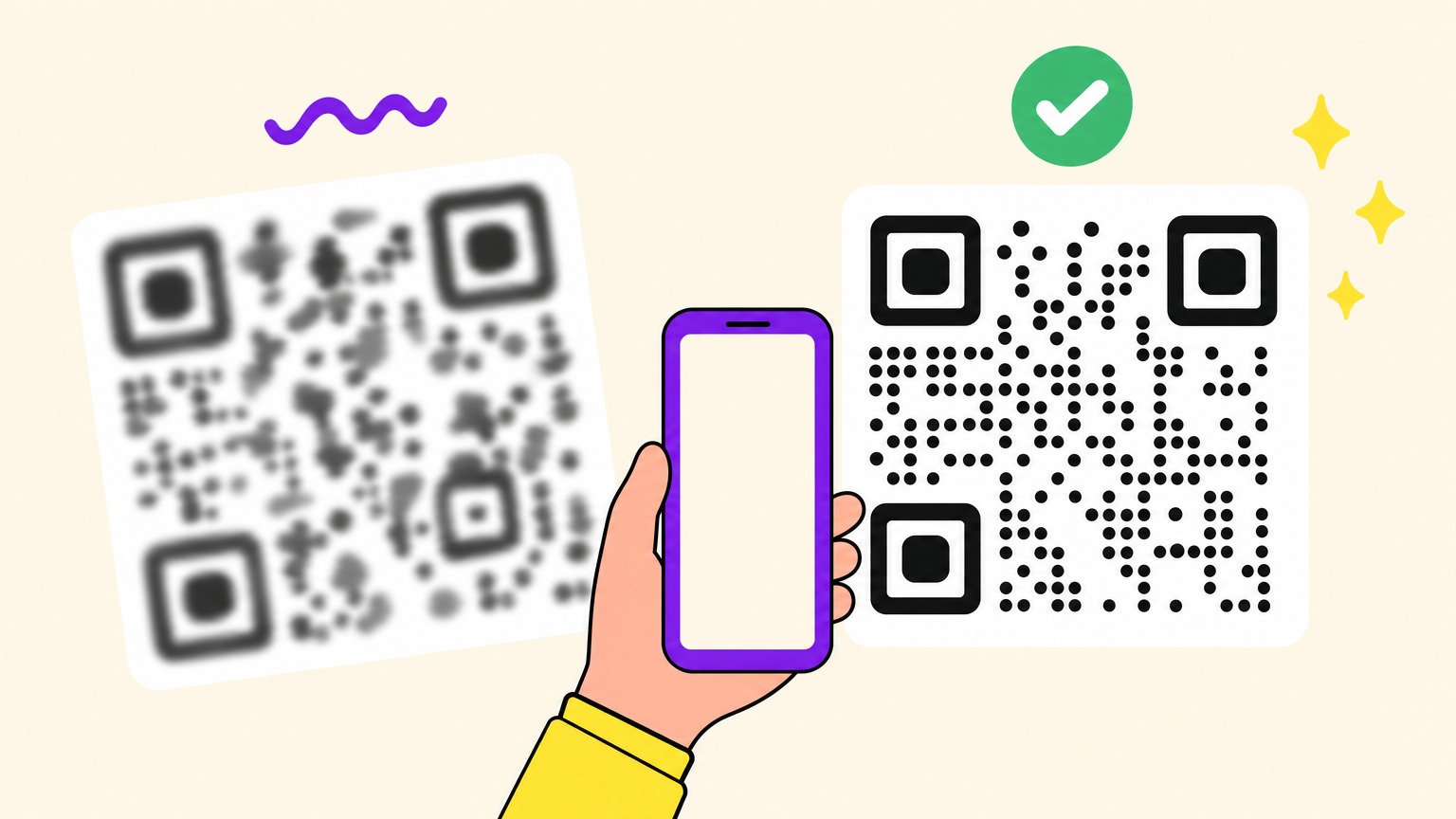
A QR code looks like this:

And how does it work?
When a QR scanner reads the code, it detects the arrangement of modules and decodes the information, to perform a corresponding action, such as opening a website, or displaying text for example. The squares located at the corners of QR codes, called "positioning marks", allow recognition of the direction and location of reading. Even in text, or even upside down, the reading device is able to correctly read and understand the data. Too strong.
But we can't talk about QR codes without mentioning its predecessor, the famous barcode!
The ancestor of the QR code: the barcode
Norman Joseph Woodland and Bernard Silver applied for a US patent in 1949 and received it in 1952. The barcode reached supermarket checkouts in the 1970s. It was developed to facilitate inventory management and commercial transactions in the distribution industry. Composed of parallel lines printed on products or labels, it is very widely used for product identification and traceability.
Denso Wave and the limitations of barcodes
In 1992, factories asked Masahiro Hara, a scanner engineer at DENSO, to speed up barcode reading. Workers often had to scan several barcodes to get the information they needed about a single part.
The creator father of the QR code
Hara’s team put the data in a square grid. Marks in three corners helped the scanner find the code even when a part was turned. DENSO introduced the QR code in 1994.
We hope he got his employee of the year title.
Aside: Legend says he was inspired by the game of GO
The game of Go is much more than the answer to the enigmatic "Chinese game in 2 letters" in our crosswords.
It is one of the most popular strategy games in Asian countries. Originally, it is played on a 19x19 line board, called Goban.

It requires 2 players, one with black stones, the other with white ones. They compete and take turns placing their stones on the intersections of the Goban. The main objective is to capture the opponent's stones by surrounding them horizontally and vertically, while preserving one's own stones. Stones encircled by the opponent are removed from the board. The player with the largest territory wins the game.
So, the link between the game of Go and the QR code is mainly visual, but still, we would have liked, too, to find the idea that would revolutionize the world after our hours spent playing Hungry Hungry Hippos! Success sometimes doesn't take much!
The QR code success story
Denso Wave decided to make QR code technology freely accessible to ordinary people, but sold the scanner technology to read them. Not foolish, the wasp.
Initially intended for industrialists, small businesses and individuals also appropriated the small square, notably for marketing, advertising purposes, or to transmit personal data more easily. Its popularity even ended up surpassing its creator, who encountered his technology on every street corner in Japan in the 2000s, thanks in particular to the cameras of new phones, allowing codes to be read.

If it's a success in Japan, the concept doesn't convince Western countries, rather behind on new technologies (no kidding?)
And it's unfortunately the health crisis of 2020 that will popularize the QR code in the world, the Holy Grail of the vaccinated, the famous Health PASS. The technology has integrated into our daily lives, and we must admit that it offers enormous possibilities and that we could no longer do without it.
So, to the philosophical answer, "is the QR code the future of the barcode?", we would even venture to answer with this question: is the QR code the future of Man?